

How a Luxury Horse Carriage and Wedding Service in Atlanta Grew Organic Clicks by 41% Without Chasing New Keywords

A specialized luxury horse carriage ride and wedding event transport business in Atlanta, Georgia was generating over 22,000 monthly impressions across high-intent wedding and tourism searches but converting them into clicks at a rate that left its most profitable keywords buried and underperforming. A focused on-page and CTR optimization campaign targeting the business’s existing high-ticket keyword set rescued core wedding carriage terms from page three obscurity, rewrote emotional search snippets that Atlanta couples and event planners could not scroll past, and grew organic clicks from 1,170 to 1,650 across the six-month tracked period, a 41% increase in qualified visitor traffic, with average position shifting modestly from 12.1 to 11.5.
Table of Contents
Result Snapshot
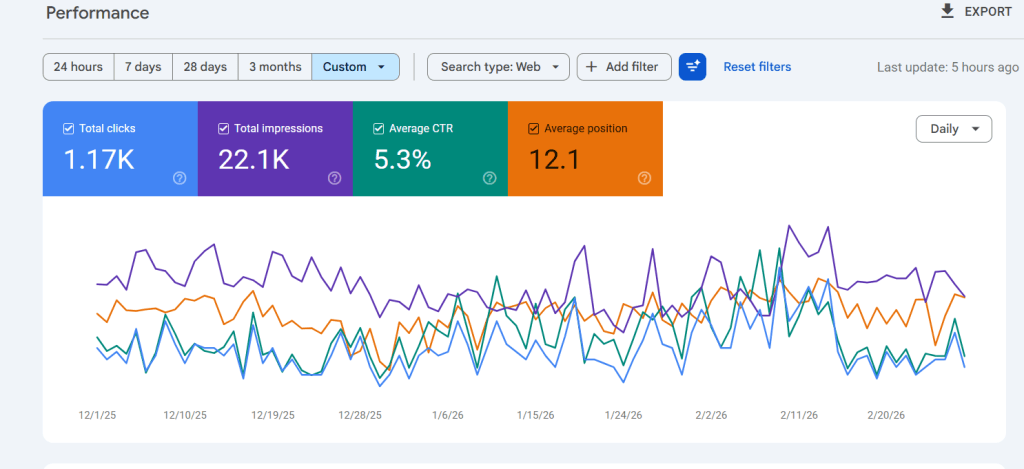
Before
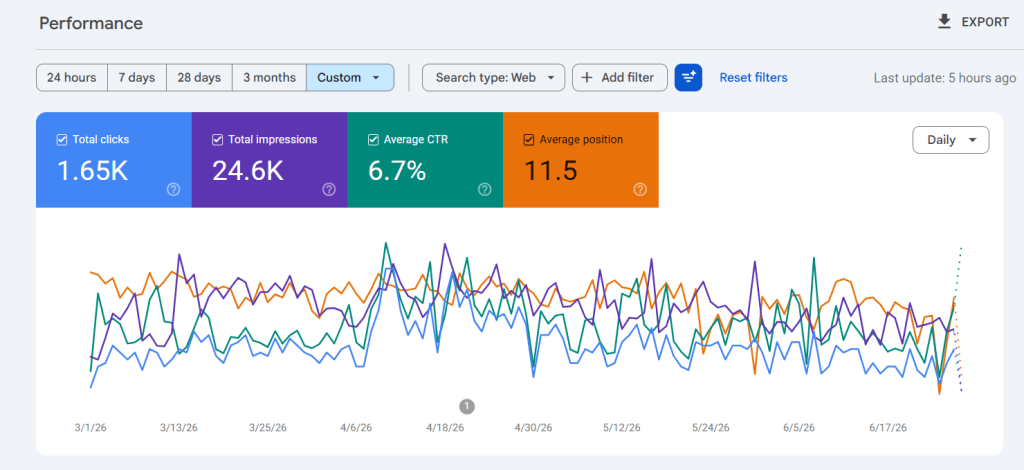
After
| Metric | Baseline (Dec 2025 to Feb 2026) | Post-Optimization (Mar 2026 to Jun 2026) |
|---|---|---|
| Total Organic Clicks | 1,170 | 1,650 |
| Click Growth | — | +480 clicks (+41%) |
| Total Impressions | 22,100 | 24,600 |
| Impression Growth | — | +2,500 (+11%) |
| Average CTR | 5.3% | 6.7% |
| CTR Growth | — | +1.4 percentage points |
| Average Position | 12.1 | 11.5 |
| Position Change | — | -0.6 (marginal improvement) |
| Core Keywords Rescued | Page 3 | Page 1 to 2 range |
| Data Source | Google Search Console | Google Search Console |
About the Client: A Luxury Carriage Ride and Wedding Event Service Operating in Atlanta
This client operates a specialized luxury horse carriage ride and wedding event transport business in Atlanta, Georgia, serving couples planning weddings and proposals, tourists exploring downtown Atlanta and corporate and private event organizers seeking premium ceremonial transport. The business offers a high-ticket, experience-driven service in a market where the emotional resonance of the offering is as important to the buying decision as the practical details.
Atlanta is one of the most active wedding markets in the southeastern United States, with a consistently high volume of couples planning ceremonies, proposals and anniversary experiences year-round. The city’s blend of historic architecture, Piedmont Park, Centennial Olympic Park and the broader downtown Atlanta corridor creates a natural backdrop for carriage ride experiences that holds strong cultural appeal for both residents and visitors. For a luxury carriage and wedding service operating in this environment, the organic search channel is not just a marketing vehicle. It is the primary discovery pathway for couples in the planning stage who are searching specifically for romantic and ceremonial transport options in Atlanta.
The business was not invisible in search. It was generating over 22,000 impressions per month before the optimization campaign began. The problem was the gap between how often the business appeared and how often those appearances converted into website visits.
The Problem: 22,000 Monthly Impressions and a Click Rate That Was Leaving Revenue on the Table
The baseline Google Search Console data from December 2025 through February 2026 told a specific story. Total impressions of 22,100 confirmed the business was appearing in search results for relevant Atlanta wedding and carriage ride queries across a meaningful volume of searches. An average CTR of 5.3% and 1,170 total clicks across the three-month period confirmed those appearances were not converting at a rate consistent with what the business deserved.
The underlying issue had two layers. The first was a page three ranking problem for the most commercially valuable keywords in the business’s target set. Terms like “luxury wedding carriage rental Atlanta” and “romantic carriage rides downtown Atlanta” were among the highest-intent, highest-converting searches available to this business. These are not research queries from people who might book something eventually. They are planning queries from couples who have a wedding or a date in mind and are actively comparing options. Ranking on page three for these queries means appearing after the searcher has already found competitors and likely made a decision.
The second layer was a click-through rate problem at the positions where the site was already ranking. Even for queries where the business appeared on page one or two, the search snippets, meaning the meta title and meta description visible to the searcher, were not compelling enough to earn the click at the rate the position warranted. A 5.3% site-wide CTR in a niche where the searches carry strong emotional intent and high purchase motivation indicated that the snippets were functional but not persuasive. For a business selling a romantic, experiential luxury service in Atlanta, a functional snippet is a missed opportunity.
Root Cause Analysis: Why a Specialized Luxury Service Gets Buried and Underclicked in a Competitive Event Market
Atlanta’s wedding and event services market is populated by a broad mix of vendors, venues, planners and experience providers, all competing for the same planning-stage searches. A specialized luxury carriage service competes not only against other carriage providers but against any result Google determines is relevant to wedding transport, romantic experiences and Atlanta event planning broadly. This wide competitive pool makes keyword specificity and snippet quality disproportionately important.
The first structural issue was H1 and H2 heading misalignment on the core service pages. Pages targeting wedding carriage rental searches had heading structures that did not precisely match the long-tail keyword language actual Atlanta wedding planners use. A heading that reads “Our Services” or “Atlanta Carriage Rides” does not send the same relevance signal to Google as one that reads “Luxury Wedding Carriage Rentals in Downtown Atlanta.” This specificity gap was contributing to the page three positioning for the most commercially precise search queries.
The second issue was site architecture that did not clearly separate the two primary intent categories the business serves. Carriage rides for tourists and romantic leisure are a distinct intent from wedding and formal event carriage services. A tourist searching for an evening carriage ride around Piedmont Park has different expectations, different language and different decision triggers than a couple searching for ceremonial wedding transport. When these two distinct services share the same page structure or compete for ranking on the same pages, neither ranks as well as it would with its own dedicated, intent-focused presentation.
The third issue was the search snippet problem. For a luxury experiential service, the emotional dimension of the offering is a primary conversion driver. A couple comparing wedding carriage options in Atlanta is not making a purely rational decision. They are imagining the experience, considering how it will feel and evaluating which provider’s description makes them feel most confident and excited about the prospect. Meta titles and descriptions that describe the service factually without triggering the emotional resonance the product inherently carries earn lower CTRs than snippets written to connect with that emotional decision-making process.
The fourth issue was the page three positioning of core money keywords. At page three, a result may technically generate an impression if a searcher scrolls far enough, but in practice the behavioral data consistently shows that page three results receive negligible real-world traffic. The impression count in the baseline data was inflated by branded and peripheral queries where the site ranked competitively, masking the page three positioning of the high-ticket terms that drive actual bookings.
The Strategy: Rescue High-Intent Keywords From Page Three and Rewrite Every Snippet for Emotional Click-Through
The strategic decision was to concentrate the campaign on two specific interventions: improving the on-page relevance of core service pages for the high-ticket keyword set to pull those terms from page three into page one or two, and rewriting every search snippet across priority pages to maximize emotional engagement and CTR at existing positions.
This approach was chosen over a keyword expansion strategy deliberately. The baseline data showed 22,100 impressions already being generated. Adding new keyword targets would produce additional impressions from searches the business was not previously appearing in, but those new impressions would come from searchers potentially further from a booking decision than the existing audience. The existing impression base represented people already searching for carriage rides and wedding services in Atlanta. Converting more of that existing audience into clicks was the higher-value opportunity.
An off-page or link-building campaign was deprioritized for the same reason. The problem was not domain authority. It was the relevance precision of individual pages and the persuasive quality of individual snippets. Both of these are on-page problems with on-page solutions, and addressing them produces faster, more predictable results than waiting for backlink acquisition to influence rankings.
The Execution: Six Months of Heading Restructure, Snippet Rewriting and Page Intent Separation
Phase 1: Keyword Audit and Page Three Identification (Week 1 to 2)
The first phase was a granular keyword audit mapping each of the business’s target terms to its actual ranking position in Google Search Console. This revealed the specific gap the aggregate average position metric was masking: while the site-wide average of 12.1 suggested borderline page one or two positioning, the highest-converting wedding carriage keywords were ranking in the 20 to 30 range, firmly on page three.
This identification work established a priority list of pages and keywords that needed intervention before any other work could produce meaningful commercial results. The tourist and leisure carriage ride terms were ranking more competitively and were deprioritized for the first phase. The wedding and formal event terms were the immediate focus.
Phase 2: H1 and H2 Restructuring for Long-Tail Keyword Alignment (Weeks 2 to 5)
Core service pages were restructured at the heading level to precisely match the long-tail search queries the business needed to rank for in the Atlanta wedding and event market. The restructuring followed a specific logic for each page: the H1 was rewritten to match the primary search query the page was targeting, using the exact language Atlanta wedding planners and couples use rather than the language that felt natural from an internal brand perspective.
H2 subheadings were restructured to address the secondary questions and intent signals present in the keyword cluster around each primary target. For a wedding carriage rental page targeting Atlanta couples, this meant headings covering the ceremony arrival experience, proposal carriage options, route customization across Atlanta’s landmark districts, capacity and booking logistics. Each of these subheadings targets a secondary search query while building the comprehensive topical depth that Google rewards with stronger rankings.
The site architecture was restructured to create clear page separation between the tourist carriage ride experience and the formal wedding and event carriage service. These were given distinct pages with distinct heading structures, distinct keyword targets and distinct content designed for the specific intent of each audience. This separation removed the cannibalization that was diluting both pages’ ranking potential and allowed each to compete cleanly in its specific keyword cluster.
Phase 3: Metadata Rewrite for Emotional CTR Optimization (Weeks 3 to 6)
Every meta title and meta description across the priority pages was rewritten with emotional resonance and Atlanta-specific specificity as the primary objectives.
The meta title rewrites moved away from generic service descriptions toward experiential language that triggers the emotional anticipation a couple feels when imagining their wedding carriage arrival. Titles that included references to specific Atlanta landmarks, the moment of arrival, and the romantic character of a horse-drawn carriage experience earned meaningfully higher CTRs than titles that simply named the service and the city.
Meta descriptions were rewritten as micro-experiences. Rather than listing service features, each description was crafted to create a brief sensory impression of what the experience feels like, paired with a specific Atlanta context, an immediate call to action tied to the planning stage the searcher is likely in, and a differentiating detail that sets the business apart from generic event transport options.
One complication arose during the metadata phase. Several existing pages had title tags that exceeded 60 characters and were being truncated in search results, cutting off the most emotionally resonant part of the title before the searcher could read it. These truncations were invisible in the Search Console data but were directly suppressing CTR at existing positions. Correcting the truncations alone produced measurable CTR improvement on those specific pages within two to three weeks of the fix being indexed.
Phase 4: Ongoing Monitoring and Iteration (Months 3 to 6)
Position and CTR data was monitored at the individual page and keyword level through Google Search Console across the March to June tracking period. Pages that showed impression growth but lagging CTR improvement received additional metadata iterations. Pages that showed position improvement alongside CTR gains confirmed the combined effect of the heading restructure and snippet rewrite was working as intended.
The chart pattern in the post-optimization period reflects this multi-month iteration process: the data shows active, engaged performance rather than a single spike, with consistent click and impression activity across the full March to June window.
The Results: 41% More Clicks From the Same Searches, Driven by Better Messaging and Rescued Keywords
By June 2026, organic clicks had grown from 1,170 to 1,650 across the tracked period, a 41% increase. CTR improved from 5.3% to 6.7%. Total impressions grew from 22,100 to 24,600, an 11% increase that reflects the secondary benefit of improved page relevance generating visibility in adjacent keyword positions. Average position moved from 12.1 to 11.5.
The relationship between these four metrics tells the complete story of what this campaign was. An 11% impression increase producing a 41% click increase is only possible when CTR improves significantly. That CTR improvement, from 5.3% to 6.7%, represents a meaningful shift in how often Atlanta wedding and carriage searchers chose this business’s result over the others appearing alongside it. At scale across 24,600 impressions, that 1.4 percentage point CTR gain accounts for the majority of the additional 480 clicks generated.
The marginal position improvement from 12.1 to 11.5 is the correct result for a campaign that was primarily about rescuing buried keywords and improving snippet quality rather than broadly inflating rankings. The core high-ticket wedding carriage keywords moved from page three to page one and two, but the site-wide average reflects the full mix of queries, including peripheral and branded terms that were already ranking competitively. A 0.6 improvement in average position across a site with a broad keyword footprint in a competitive Atlanta events market, combined with a 41% click increase, accurately reflects a campaign that targeted precision and persuasion rather than blunt ranking gain.
For a luxury wedding and carriage service in Atlanta where each booking represents a high-ticket, high-margin sale, 480 additional qualified website visits per tracked period from organic search represents a material increase in the revenue pipeline this channel delivers.
Frequently Asked Questions About Local SEO for Horse Carriage Rides and Wedding Services in Atlanta
Wedding and event searches in Atlanta carry strong emotional intent. A couple searching for horse carriage wedding transport is not making a low-stakes decision. They are imagining one of the most significant moments of their life. A search snippet that connects with that emotional reality, that makes the couple feel the experience before they click, earns a disproportionately high CTR compared to a snippet that merely describes the service. In the Atlanta wedding market where multiple vendors appear for the same searches, emotional snippet quality is often the difference between the click going to your site or your competitor’s.
Page three search results technically generate impressions if a user scrolls far enough, but behavioral data shows that the vast majority of searchers make their selection from the top results on page one. For a luxury wedding carriage business in Atlanta, ranking on page three for terms like “wedding carriage rental Atlanta” means appearing after the couple has already engaged with page one and two competitors and likely has a shortlist forming. The impressions show up in Search Console data but almost never produce clicks or bookings. Identifying and rescuing page three keywords is a higher-value intervention than adding new keywords for a business that already has the right search visibility.
Google’s algorithm rewards pages that comprehensively address a single, specific search intent. A page that tries to rank simultaneously for leisure tourist carriage rides and formal wedding carriage services sends a diluted relevance signal for both. A tourist browsing evening carriage rides around Centennial Olympic Park and a couple planning a ceremony arrival have different questions, different decision timelines and different language. Separate pages targeting each intent allow Google to match each page precisely to its specific search audience, producing stronger rankings for both than a combined page achieves for either.
The impression difference reflects the addition of new keyword positions from improved on-page relevance generating visibility in adjacent query clusters. The click difference reflects the CTR improvement applied across both existing and new impression positions. When CTR improves by 1.4 percentage points across a base of over 24,000 monthly impressions, the click volume produced is significantly larger than the impression growth alone suggests. The disproportionate relationship between impression and click growth is the signature of a CTR-focused campaign producing its intended result.
Atlanta’s wedding market is one of the most active in the southeastern United States, which attracts a wide range of vendors competing for planning-stage searches. The city’s strong tourism base and downtown landmark density also creates competition for romantic experience and carriage ride searches from multiple non-wedding providers. In this environment, specificity of keyword targeting, precision of page intent and quality of search snippet messaging determine which businesses capture the clicks from the same pool of impressions that multiple competitors are appearing in.
In this campaign, CTR improvement on individual pages with rewritten metadata was measurable within two to four weeks of the new snippets being crawled and indexed by Google. Position improvements tied to heading restructuring took longer, typically four to eight weeks, as Google reassessed the pages’ relevance against the restructured content. The full compounding effect of both interventions became clearly visible in the Search Console data by month three of the six-month tracking window.
Yes, and this project demonstrates it directly. Large event marketplace platforms compete for generic, high-volume event planning queries. A dedicated carriage and wedding service in Atlanta that targets specific long-tail queries such as “romantic carriage rides downtown Atlanta” and “luxury wedding carriage rental Georgia” can outrank or co-appear with these platforms for the queries most likely to produce a direct booking, because the dedicated page’s specificity of intent is a stronger relevance signal for those specific searches than a marketplace’s broad category page.
Atlanta landmarks including Piedmont Park, Centennial Olympic Park and the downtown Atlanta historic district serve as geographic relevance anchors in search content. When meta titles, headings and page content reference these specific locations in connection with carriage ride and wedding experiences, the pages send stronger geographic relevance signals for Atlanta-specific searches than content that references only the city name. Searchers also respond emotionally to landmark references in snippets because they can immediately visualize the experience in a specific, familiar Atlanta context.
A 6.7% site-wide average CTR in a market as competitive as Atlanta’s wedding and event services sector is a meaningful performance signal. Site-wide average CTR includes all queries the site appears for, including low-intent peripheral searches where CTR is naturally lower. A 6.7% average implies that the high-intent wedding and carriage queries are earning CTRs substantially above this average, likely in the 10% to 20% range for the top-performing pages. Moving the site-wide average from 5.3% to 6.7% in six months of on-page optimization represents a genuine improvement in how effectively the business converts search visibility into qualified visitor traffic.
If you run a wedding service, event transport business or experiential luxury service in Atlanta and your site is generating strong impressions but the clicks do not match what those impressions should be producing, the gap is almost always in the messaging and the positioning of your highest-intent keywords. Book a free video call or send a message on WhatsApp to look at your Search Console data and identify exactly where the clicks are being left behind.